Destinations
The New Map of UHNWI Sociability
Club memberships are now a leading indicator of urban UHNWI concentration

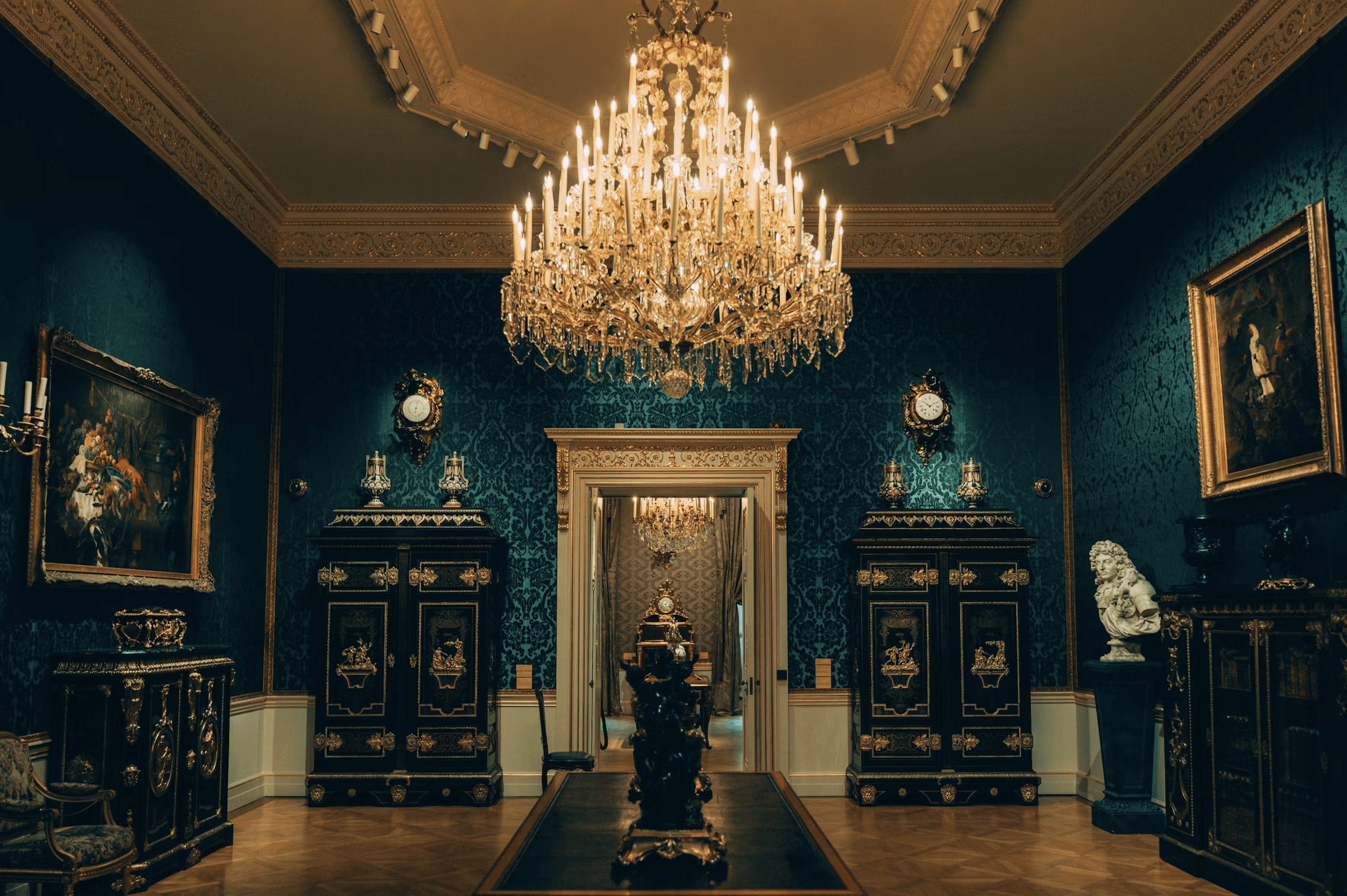
Track where UHNWI principals are showing up week to week, and a map emerges that fifteen years ago did not exist. Urban private members clubs are the new sociability infrastructure of the global wealthy. Soho House, founded by Nick Jones in 1995 as a single Greek Street location, has expanded to 45 locations across cities including London, New York, Berlin, Mumbai, and Bangkok, with membership exceeding 200,000 by 2024 (Soho House Group, 2024). What started as a creative-industries clubhouse has become the template for a much broader category. Annabel’s in Berkeley Square (founded 1963, restored by Richard Caring in 2007), 5 Hertford Street (Robin Birley, 2012), The Arts Club Mayfair, the Aman New York Club, Casa Cipriani in Lower Manhattan, and the new Birley-designed Carrington on Piccadilly all occupy the same broad terrain.
What changed? The previous generation of UHNWI sociability centred on destination clubs. St. Andrews and Augusta for golf. Eden-Roc and the Cipriani for summer. Annabel’s evening, Brooks’s day, in London. The destination club required principals to converge on a single physical location at specific moments of the year. Urban private clubs work the other way around. Principals already in the city for business, family, or fiscal reasons need infrastructure for the days and weeks they are there. The club follows the principal rather than the other way around.
Caroline Knowles documented this shift before it had reached its current scale. In Serious Money, she describes the dense network of clubs, restaurants, and gentlemen’s institutions through which London’s super-rich maintain their social standing and conduct their business (Knowles, 2022). The club functions, in her framing, as both a working space and a credentialing mechanism. Membership signals belonging to a peer group whose endorsement matters. The transactions that flow through these spaces (real estate referrals, art acquisitions, private equity co-investments, marriage and divorce conversations) often dwarf what happens in the formal advisory office.
Urban clubs do what destination clubs cannot. They provide consistent infrastructure for principals who live across multiple cities. They host the type of cross-introductions (private banker to family office to art advisor) that fixed-location institutions cannot replicate. They allow the principal to walk in alone in a foreign city and find a recognisable peer environment. Soho House’s 200,000 members globally function as a portable network: a Soho House member arriving in any of the 45 locations is recognised, accommodated, and integrated within hours.
Economics are distinctive. Urban club memberships command initiation fees of 50,000 to 250,000 dollars and annual dues comparable to the most exclusive country clubs. 5 Hertford Street’s membership is reportedly around 5,000 with an entry fee of 3,000 pounds and annual dues of 1,200 pounds, but with a waiting list measured in years. Casa Cipriani’s New York membership runs at approximately 4,800 dollars annual fee plus initiation. Aman Club membership is structured around hotel residence ownership in some cases, integrated into the broader Aman ecosystem. The unifying feature is that the membership is non-fungible: it cannot be transferred, sold, or rented, and it depends on social vetting in addition to financial qualification.
Geography of the new clubs reveals the broader UHNWI map. London remains the densest hub (Annabel’s, 5 Hertford Street, The Arts Club, Soho House Greek Street and Soho House White City, the Mark’s Club, Mark’s, The Garrick). New York has caught up substantially in the last decade (Casa Cipriani, Zero Bond, The Twenty Two, Aman Club, Soho House Meatpacking, plus the established Knickerbocker and Brook clubs). Miami’s growth has been the fastest: Major Food Group’s ZZ’s Club, Casa Tua Cucina, Soho Beach House, Faena’s evolving member offerings, and increasingly the marina-integrated clubs at Norman Foster’s Una Residences and Aston Martin Residences.
Paris has been slower to adopt the new format. The traditional Parisian club universe (Travellers, Automobile Club, Polo de Paris) remains structurally different from the Anglo-American model. Soho House Paris opened in 2024 on rue de Sevres. Le Marais Club, Maison Estelle, and a series of Birley-influenced private spaces have emerged. Milan has The Wilde, Bagatelle, and Studio Cipriani. Tokyo has been transformed by Aman Tokyo’s club component and the broader integration of luxury hotels with members-only spaces. Dubai’s club universe (Capital Club, Bvlgari Yacht Club, La Cantine Dubai by Beefbar) is structurally different, oriented toward business networking rather than social membership.
Brooke Harrington’s analysis of wealth management infrastructure applies here in a non-obvious way. The advisory architecture Harrington describes (lawyers, accountants, trustees, family office directors) operates not just through formal offices but through the social spaces where principals and advisors actually meet (Harrington, 2016). The Birley club, the Aman Club, the new Soho House are not just leisure spaces. They are the working environments where high-trust advisory relationships are formed and maintained. Advisors with no presence in these spaces are systematically excluded from a portion of the UHNWI relationship economy.
The implication for service providers is direct. Real estate brokerages, wealth managers, and family office providers are increasingly underwriting club memberships for their senior client-facing professionals. This is not a perk. It is access infrastructure. The senior broker at Knight Frank, Compass, or Christie’s International Real Estate with active memberships at Annabel’s, 5 Hertford Street, the Arts Club, Aman New York Club, and Casa Cipriani Miami operates with a fundamentally different deal flow than the equivalent senior broker without these memberships. The cost of the memberships (perhaps 25,000 to 75,000 dollars annually across the portfolio) is recovered in a single transaction.
Where this trend is heading is visible. The new generation of urban clubs is increasingly integrated with branded residences. Aman New York paired with Aman Club. London’s One Carrington opening as 28 residences opposite The Carrington club (Robin Birley’s new project). New York’s Casa Cipriani at the Battery integrated with residential development. The integration responds to the same Ultra-Mobile owner archetype Knight Frank identifies in its Wealth Report 2026 (Knight Frank, 2026): principals constructing residence as part of an integrated social and operational infrastructure.
For brokerages and advisors, the lesson is concrete: the new UHNWI map is not just geographic. It is social. Mapping the geography without mapping the club infrastructure misses where the actual relationships and transactions are forming. The next decade of UHNWI service provision will be defined by firms that operate fluently within this club geography, with senior professionals embedded in the relevant memberships and structural relationships with the clubs themselves.
References
Atkinson, R., Burrows, R., and Rhodes, D. (2016) ’Capital City? London’s Housing Markets and the Super-Rich’, in I. Hay and J.V. Beaverstock (eds.) Handbook on Wealth and the Super-Rich. Cheltenham: Edward Elgar Publishing, pp. 225-243.
Harrington, B. (2016) Capital Without Borders: Wealth Managers and the One Percent. Cambridge, MA: Harvard University Press.
Hay, I. and Beaverstock, J.V. (eds.) (2016) Handbook on Wealth and the Super-Rich. Cheltenham: Edward Elgar Publishing. ISBN 978-1-78347-403-5.
Knight Frank (2025a) The Global Branded Residence Survey 2025. London: Knight Frank Research.
Knight Frank (2026) The Wealth Report 2026. London: Knight Frank Research.
Knowles, C. (2022) Serious Money: Walking Plutocratic London. London: Allen Lane (Penguin).
McKenzie, R. and Atkinson, R. (2020) ’Anchoring capital in place: The grounded impact of international wealth chains on housing markets in London’, Urban Studies, 57(1), pp. 21-38.
Paris, C. (2016) ’The Residential Spaces of the Super-Rich’, in I. Hay and J.V. Beaverstock (eds.) Handbook on Wealth and the Super-Rich. Cheltenham: Edward Elgar Publishing, Chapter 12, pp. 244-263.