Destinations
The End of the Mediterranean Summer
From Saint-Tropez to Montenegro, the new UHNWI summer is fragmented across continents

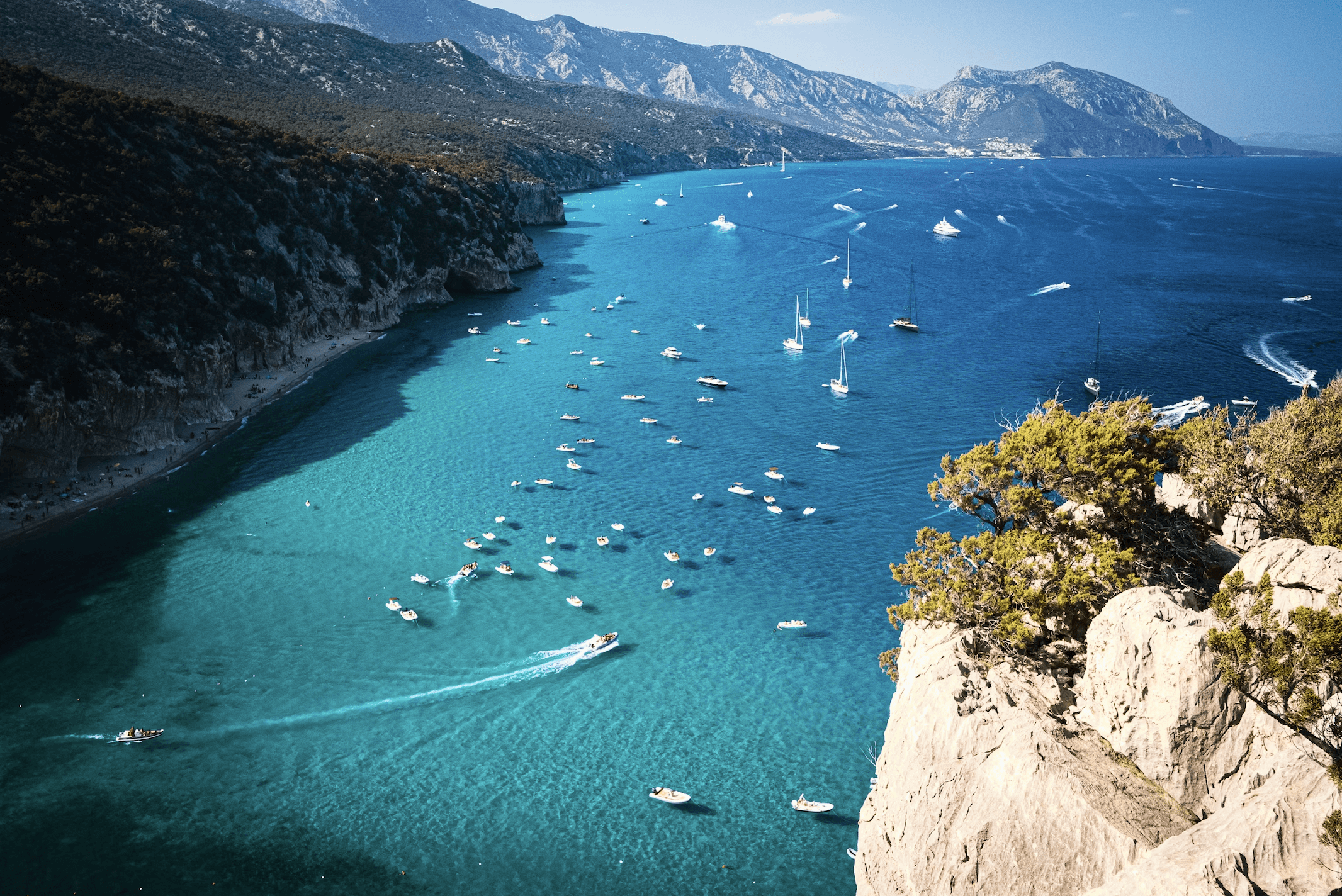
What happened to the Mediterranean summer? For decades it was the structural anchor of UHNWI seasonal rhythm. Cote d’Azur in July. Sardinia and Capri in August. Brief excursions to Mykonos. The pattern was so predictable that luxury brands, hotels, and yacht operators built their entire annual revenue cycles around it. By 2024, the pattern has fragmented. Saint-Tropez and Porto Cervo retain their position, but they are now one stop among many rather than the default. Montenegro’s Lustica Bay, Albania’s Dhermi coastline, Croatia’s Dalmatian islands, the Aegean beyond Mykonos (Paros, Antiparos, the Sporades), and increasingly Northern European destinations have absorbed substantial share of the wealthy summer.
Several drivers explain the dispersion. Climate and overcrowding have degraded the appeal of the traditional Mediterranean hotspots. Saint-Tropez in August now operates at occupancy levels and pricing that have alienated the older UHNWI cohort. The marina is full. The streets are impassable. The Voiles de Saint-Tropez in early October has paradoxically become more pleasant than peak August. Capri in August is similarly saturated, with the most exclusive residences priced beyond their utility value. Mykonos has shifted toward a younger, more aggressive party economy that has displaced the older UHNWI clientele.
Climate matters operationally. Mediterranean summer temperatures have risen materially over the past decade. The European Environment Agency reports that Mediterranean summer temperatures averaged 2.1 degrees Celsius above the 1990 baseline by 2023 (EEA, 2024). For principals operating with significant aviation between locations, the heat is more than discomfort. It is a structural deterrent. Air conditioning and indoor spaces become the operational base rather than the gardens and terraces traditional Mediterranean architecture was designed around.
The deeper shift is generational. Younger UHNWIs reject the monolithic August migration. They construct their summers as itineraries rather than fixed positions. Two weeks in Sardinia, then a week in Montenegro, then ten days in Antiparos, then a return through Croatia. The Knight Frank Wealth Report 2026 documents this through the Ultra-Mobile owner archetype: principals spending fewer than 90 days per year in any single residence, operating across multiple bases (Knight Frank, 2026). The summer rhythm is the most visible expression of the broader mobility pattern.
Geography of the new Mediterranean summer reveals where capital is flowing. Montenegro’s Lustica Bay, developed by the Maltese group Orascom Development, has become a serious destination for principals seeking Adriatic positioning without the saturation of Croatia. The marina infrastructure, the property pricing (substantially below Sardinia or Saint-Tropez for comparable acquisition), and the regulatory simplicity for non-EU principals have created a meaningful new node. Albania’s Riviera (Dhermi, Himare, Saranda) is earlier in the cycle but attracting trophy estate acquisition from principals priced out of comparable Greek coast locations.
Croatia continues to absorb significant UHNWI flows. Dubrovnik, Hvar, Korcula, and increasingly the lesser-known Croatian islands (Vis, Lastovo, Sipan) have become primary destinations. The marina infrastructure in Croatia has expanded substantially over the past decade, with ACI marinas now operating at 22 locations along the Dalmatian coast. Yacht charter starts in Split or Dubrovnik for the Croatian itinerary now compete materially with the traditional Italian and French Riviera departure points.
The Aegean beyond Mykonos has expanded as the older UHNWI cohort searches for less-saturated alternatives. Paros and Antiparos have become primary destinations, with Antiparos in particular hosting a concentrated UHNWI community including, by industry reports, principals such as Tom Hanks, Anna Wintour, and major US tech executives during summer weeks. The Sporades (Skiathos, Skopelos, Alonissos) and the smaller Cyclades (Folegandros, Sifnos, Serifos) attract principals priorising privacy. Greek tax regime stability, the Greek Golden Visa still operating at 250,000 to 800,000 euros depending on location, and the operational maturity of Greek marina infrastructure have supported the expansion.
Northern alternatives have grown faster than most observers expected. Comporta, on the Atlantic coast of Portugal, has emerged as one of five destinations Knight Frank’s Residence Report 2025/26 identifies as redefining European luxury living (Knight Frank, 2025b). The Comporta logic is direct: cool Atlantic climate, controlled development, low building density, proximity to Lisbon for operational base. The Scottish Highlands, the Irish west coast, the Norwegian fjords, and the Swedish archipelago have all absorbed shoulder-season UHNWI travel that previously would have stayed Mediterranean.
Caroline Knowles’ framework helps decode the shift. Knowles documents how the very wealthy use seasonal destinations as identity markers within their peer networks (Knowles, 2022). The Mediterranean summer carried particular reputational weight because it required the right address, the right boat, the right club membership at the Cap-Eden-Roc or the Yacht Club de Monaco. The fragmentation of the destinations dilutes the reputational concentration. A summer split between Montenegro, Antiparos, and the Swedish archipelago signals a different kind of sophistication than the traditional Saint-Tropez-Sardinia rotation. Younger UHNWIs are constructing this fragmented identity deliberately, not by default.
Luxury brands optimised for the historical Mediterranean rhythm are struggling. Hospitality groups, retail brands, and event organisers built around the July-August Cote d’Azur peak face a structural revenue compression as the season fragments. Bvlgari, Dolce and Gabbana, and the major fashion houses have responded by extending their seasonal programming earlier into June and later into September, with corresponding operational adjustments at their hospitality properties. Hotel groups have shortened the high-season window and increased shoulder-season pricing to compensate.
For brokerages and advisors, the implication is direct. The Mediterranean summer remains relevant but is no longer the singular anchor of UHNWI summer planning. The advisor who can speak to the new dispersion (Montenegro positioning, Greek tax optionality, Comporta acquisition, Albanian Riviera early-stage opportunity, Croatian charter routes) operates with a substantially different value proposition than the advisor still recommending Cap-Ferrat or Porto Cervo as the default. Service providers tracking the new map are positioning for the principals constructing the new UHNWI summer geography.
References
Atkinson, R., Burrows, R., and Rhodes, D. (2016) ’Capital City? London’s Housing Markets and the Super-Rich’, in I. Hay and J.V. Beaverstock (eds.) Handbook on Wealth and the Super-Rich. Cheltenham: Edward Elgar Publishing, pp. 225-243.
Hay, I. and Beaverstock, J.V. (eds.) (2016) Handbook on Wealth and the Super-Rich. Cheltenham: Edward Elgar Publishing. ISBN 978-1-78347-403-5.
Knight Frank (2025b) The Residence Report 2025/26. London: Knight Frank Research.
Knight Frank (2026) The Wealth Report 2026. London: Knight Frank Research.
Knowles, C. (2022) Serious Money: Walking Plutocratic London. London: Allen Lane (Penguin).
Paris, C. (2016) ’The Residential Spaces of the Super-Rich’, in I. Hay and J.V. Beaverstock (eds.) Handbook on Wealth and the Super-Rich. Cheltenham: Edward Elgar Publishing, Chapter 12, pp. 244-263.