Luxury Assets
The 90 Million Dollar Co-Owner
The traditional binary of full ownership or rental is dissolving

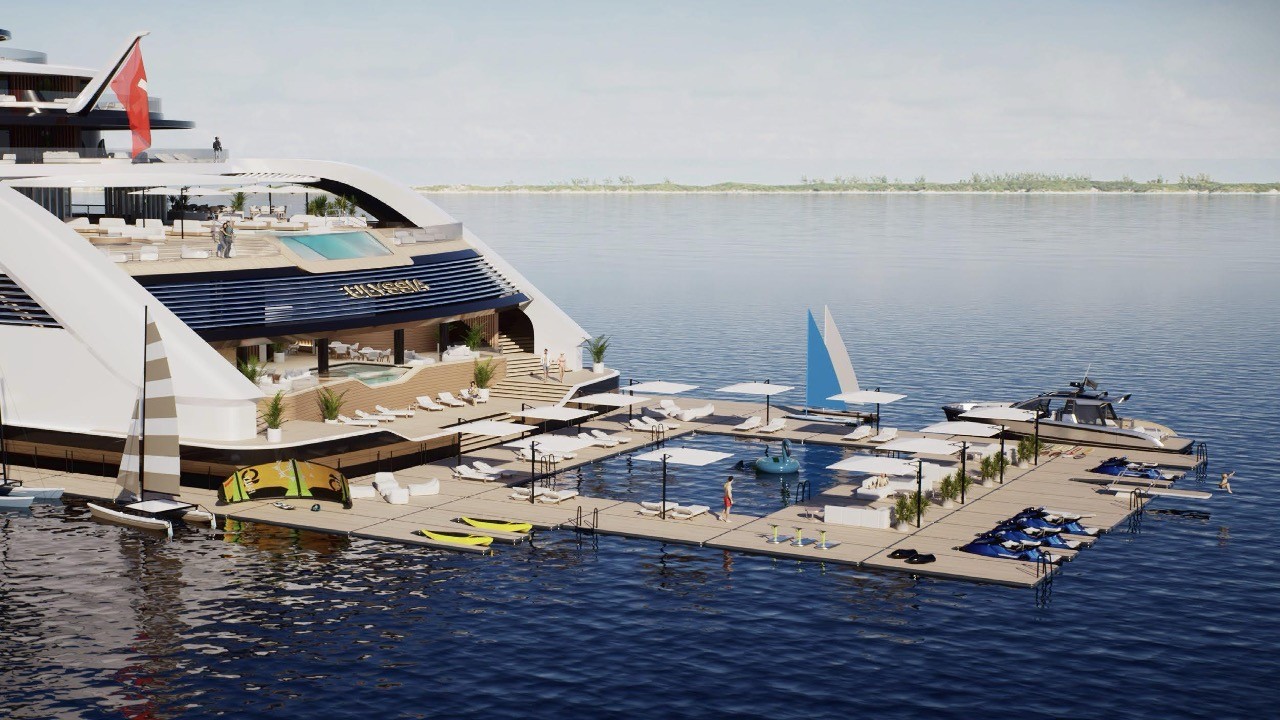
Fractional yacht ownership was, for two decades, a structurally marginal product. The economics did not quite work. Depreciation rate of a 50-metre vessel made shared ownership riskier than the projected savings justified. The coordination among co-owners produced as much friction as the financial saving eliminated. By 2015, the segment had effectively collapsed at the upper end of the market. What changed since 2022 is the entry of structured fractional platforms operating at the 80-metre and above tier, with co-ownership architectures designed by tax lawyers and operational coordinators rather than yacht brokers. The economics now work for a specific UHNWI buyer profile.
The model is straightforward in concept. A 90-metre full-displacement yacht with a delivery price around 90 to 130 million euros is acquired by a special purpose vehicle, typically incorporated in Malta, Marshall Islands, or Cayman. The SPV is owned by four to eight co-owners, each holding an equal share with documented usage rights covering eight to ten weeks per year per share. The vessel is professionally managed under a commercial charter flag, generating revenue from open charter weeks not allocated to co-owner usage, with revenue distributed pro rata after operating costs. Each co-owner’s annual cost typically runs from 1.8 to 3.5 million euros depending on usage pattern and revenue allocation, against an equivalent full-ownership cost of 8 to 14 million euros annually for the same vessel.
The real innovation is legal and operational architecture rather than financial principle. Co-ownership has existed in yachting for centuries. What is new is the scale at which it now operates and the sophistication of the documentation supporting it. Specialised firms such as Ulyssia (designing a 320-metre residential yacht for 132 apartment co-owners with apartments priced from 6 to over 100 million euros), Storylines (a similar floating residence concept), and Aqua Mare (chartered-yacht-as-residence platform) operate in the broader category. The most active conventional model is the 60-to-90-metre co-owned single vessel structured through a private SPV.
Knight Frank’s Wealth Report 2026 finding that approximately 22 percent of UHNWIs plan to invest in luxury residential property in 2026 is paralleled by industry survey data suggesting growing interest in fractional yacht ownership among principals with net worth in the 30 million to 200 million dollar range (Knight Frank, 2026). The 200 million dollar-plus principal still acquires full ownership. The 500 million dollar-plus principal acquires multiple full-ownership vessels. The 30 to 200 million segment is where fractional ownership has become competitive with full ownership, and where the platform structure has matured most rapidly.
Brokerage response has been to integrate fractional offerings alongside traditional full-ownership sales. Camper and Nicholsons, Burgess, and Edmiston all offer structured fractional advisory, though depth varies. The largest fractional advisors are typically multi-disciplinary firms combining maritime law, tax planning, and brokerage rather than pure brokerage operations. Advisory work for fractional acquisition is substantially more complex than full-ownership transactions: SPV structuring, inter-owner agreement drafting, usage allocation, dispute resolution, and eventual exit mechanism each require specialised work pure-play brokerages cannot deliver alone.
Brooke Harrington’s analysis of wealth management documents the architecture making structured fractional ownership viable. The trust-based ownership structures Harrington describes for fixed real estate apply with modifications to yacht ownership. The principal does not directly hold the SPV interest. The interest is held through a trust or holding company structured for succession planning, tax efficiency, and confidentiality. The yacht broker, the tax counsel, the trustee, and the operational manager coordinate through a single point of contact at the family office or private client lawyer (Harrington, 2016).
Use case profile is specific. Fractional ownership works best for principals who want predictable annual usage of 8 to 10 weeks on a vessel of significant size, but cannot or do not want to absorb the full cost of ownership and operation. The typical co-owner profile: a principal between 45 and 65 years old, often a successful entrepreneur or investment manager, frequently a second-generation family member rather than the founding wealth generator. The full-ownership psychology of dynastic founders is less aligned with shared ownership than the more pragmatic posture of second-generation principals or recently liquidified entrepreneurs.
There are real frictions the marketing materials do not emphasise. The most consistent point of co-owner disagreement is scheduling. Mediterranean summer windows are the most contested period, particularly mid-July through mid-August around the Cannes Film Festival, the Monaco Grand Prix, and the Voiles de Saint-Tropez. Sophisticated SPV documentation now uses lottery systems or rotating priority schedules to distribute high-demand weeks equitably across co-owners. The management of these conflicts requires permanent staff attention. Co-ownership platforms charging an annual management fee of 3 to 5 percent of acquisition value over and above operating costs typically include this dispute resolution as part of the service.
The charter revenue dimension is also more variable than fractional marketing materials suggest. A vessel allocated 30 weeks to co-owner usage cannot generate 30 weeks of charter revenue. The remaining 22 weeks of the year are split between maintenance, repositioning, refit, and open charter availability. Of those 22 weeks, perhaps 8 to 12 actually generate paid charter at market rates. The remaining weeks generate operating costs without revenue. Net charter revenue offset against operating cost is typically 25 to 40 percent rather than the 50 to 70 percent that early platform marketing implied. Co-ownership remains financially attractive against full ownership at this lower offset rate, but the offset is meaningful only with realistic expectations.
Caroline Knowles’ ethnographic framework for understanding UHNWI consumption applies here. Knowles describes the wealthy not as individuals making isolated decisions but as members of dense advisory and social networks where acquisitions emerge from peer influence and reputational positioning (Knowles, 2022). The fractional yacht owner’s decision typically follows extensive consultation within a peer group, often anchored to a specific yacht the principal has chartered repeatedly. The relationship between the principal and the vessel typically pre-dates the ownership decision by two to four years of charter experience. This pattern, of charter-before-ownership, is one of the reasons charter operators have integrated fractional advisory into their full-service offerings.
For brokerages and family offices, working implications are direct. Advisory work for fractional acquisition is more time-intensive than full-ownership advisory, and commission structures are smaller. Brokerages winning the fractional segment are those operating with integrated maritime law, tax counsel, and operational management capacity. The traditional pure-play yacht brokerages charging commission on the transaction alone cannot capture the full advisory economics of the fractional model. Integrated platforms (Camper and Nicholsons, Burgess, Northrop and Johnson at scale, smaller specialists such as Y.CO for charter-focused advisory) are reshaping the competitive structure of the brokerage industry.
If the Knight Frank intent data is approximately correct and the UHNWI population growth (713,626 globally in 2026, up 32 percent since 2021) continues at a 4 to 5 percent annual rate, the structurally addressable market for fractional yacht ownership at the 60 to 90-metre tier expands by approximately 8 to 12 percent annually. Service providers positioned with the operational depth to capture this segment will see compounding share gains. Service providers operating on a transactional-commission model will see margin erosion as the integrated advisory model captures the relationship value. This generational shift will reshape luxury developments for the next decade.
References
Camper and Nicholsons (2025) Annual Market Review 2024/2025. Monaco: Camper and Nicholsons International.
Edmiston (2025) Edmiston Leads Superyacht Market in 2024 with 1.25 billion euros in Sales. Monaco: Edmiston and Company, January 2025.
Harrington, B. (2016) Capital Without Borders: Wealth Managers and the One Percent. Cambridge, MA: Harvard University Press.
Hay, I. and Beaverstock, J.V. (eds.) (2016) Handbook on Wealth and the Super-Rich. Cheltenham: Edward Elgar Publishing. ISBN 978-1-78347-403-5.
Knight Frank (2026) The Wealth Report 2026. London: Knight Frank Research.
Knowles, C. (2022) Serious Money: Walking Plutocratic London. London: Allen Lane (Penguin).
Market Research Future (2025) Yacht Charter Market Research Report: Forecast to 2035. Pune: Market Research Future.
Paris, C. (2016) ’The Residential Spaces of the Super-Rich’, in I. Hay and J.V. Beaverstock (eds.) Handbook on Wealth and the Super-Rich. Cheltenham: Edward Elgar Publishing, Chapter 12, pp. 244-263.
Research and Markets (2025) Yacht Charter Market Report 2025. Dublin: Research and Markets.
Spence, E. (2016) ’Performing Wealth and Status: Observing Super-yachts and the Super-rich in Monaco’, in I. Hay and J.V. Beaverstock (eds.) Handbook on Wealth and the Super-Rich. Cheltenham: Edward Elgar Publishing, Chapter 14.
Superyacht Investor (2024) ’Talking Markets: Superyacht Investor London 2024.’ Conference proceedings, July 2024.